
Search Calhoun County Family Court Records
Calhoun County family court records are filed with the District Clerk in Port Lavaca and include divorce cases, child custody orders, child support matters, paternity filings, and protective orders from the county's district courts. You can search Calhoun County family court records using the statewide re:SearchTX portal, visit the courthouse in Port Lavaca during office hours, or send a written request to the District Clerk. Calhoun County is part of the 135th and 267th Judicial Districts. The clerk's office handles all family law case filings and maintains records going back through the county's history on the Texas Gulf Coast.
Calhoun County Overview
Calhoun County District Clerk
The District Clerk in Port Lavaca keeps all family law case files for Calhoun County. This office handles new filings, processes records requests, and maintains the county's civil and family case dockets. If you need a certified copy of a divorce decree, want to look up an old custody case, or need to verify the status of a support order, the District Clerk is the right place to start.
Calhoun County is a coastal county on the Texas Gulf. The courthouse is in Port Lavaca, the county seat and largest community. Staff can help you search by party name or cause number. In-person visits are accepted during regular business hours. Call ahead to confirm current hours and whether you need to bring any specific information for your request.
| Office | Calhoun County District Clerk |
|---|---|
| Address | 211 S. Ann St., Port Lavaca, TX 77979 |
| Phone | (361) 553-4630 |
| Hours | Monday through Friday, 8:00 AM to 5:00 PM |
| Website | calhouncotx.org |
The Calhoun County Clerk handles marriage licenses, deed records, and probate filings. For family court cases filed in district court, the District Clerk is the correct contact. Both offices operate out of the Calhoun County Courthouse. Calhoun County also falls within the jurisdiction of the 135th and 267th Judicial Districts, which cover multiple South Texas counties.
How to Find Calhoun County Family Court Records
The statewide re:SearchTX portal is the best starting point for searching Calhoun County family court records online. The system covers cases filed through the state e-filing platform since November 2018. You can search by party name, cause number, attorney name, or filing date range. Results show case status, party roles, and docket entries. The tool is free and available 24 hours a day.
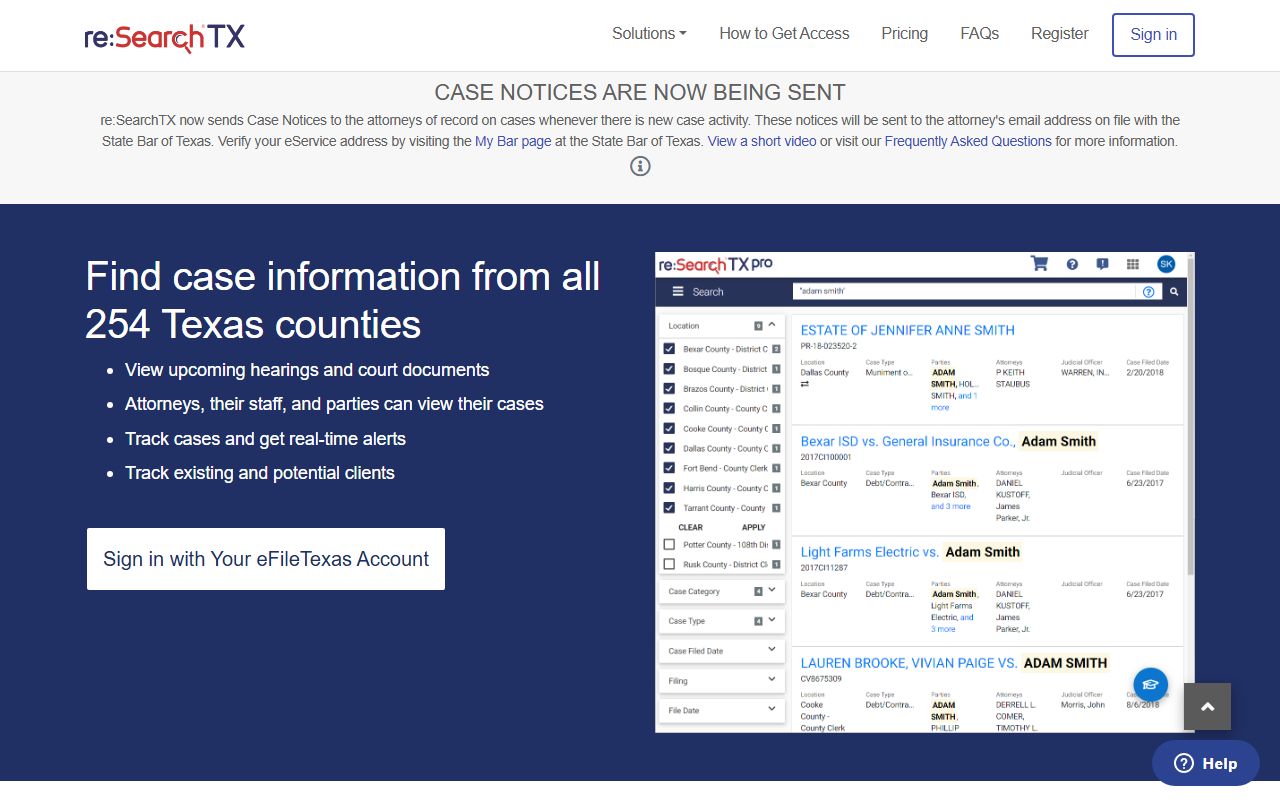
re:SearchTX provides online access to family court case records from Calhoun County through the Texas Judicial Branch's statewide search system.
For older cases not in re:SearchTX, or if you need actual document copies, contact the District Clerk directly at (361) 553-4630. In-person visits allow you to use public access terminals at the courthouse. Staff can help narrow a search if you have partial information. Mail requests should include the case name, approximate filing date, and list of documents needed. Include a check or money order for the applicable fees.
The Texas Attorney General's Child Support Division maintains separate enforcement records for child support cases. If you are trying to track a child support payment history or enforcement action, contact the AG's office directly through texasattorneygeneral.gov rather than the District Clerk.
Types of Records in Calhoun County Family Court
Calhoun County District Court handles divorce, legal separation, annulment, custody, support, paternity, and protective order cases. Divorce files contain the original petition, service records, any temporary orders, the final decree, and any later modifications. If children are part of the case, the file also includes a parenting plan, possession schedule, and support orders.
Suits affecting the parent-child relationship cover custody and support cases filed outside of a divorce. These are common when parents were never married or when a prior court order needs to be changed. Paternity cases are also handled here and can result in orders that establish a parent-child relationship, set a custody arrangement, and require support payments.
Texas maintains a searchable protective order registry under Monica's Law. This system lets the public search by name, county, or birth year for active protective orders. Some details in protective order filings may be restricted to protect the safety of the petitioner.
Note: Juvenile records, adoption files, and child protective services records are not part of the public court index and require a court order to access.
Filing a Family Court Case in Calhoun County
To file for divorce in Calhoun County, at least one spouse must meet the residency requirements under Texas Family Code section 6.301. One spouse must have lived in Texas for six months and in Calhoun County for 90 days before filing. If you do not meet this, you need to wait or file in a county where you do qualify.
Attorneys must file through eFileTexas.gov, the state's mandatory electronic filing system. Self-represented parties may also use the e-filing system. Paper filings at the clerk's office are still accepted from pro se litigants. Texas law under Family Code section 6.702 requires a 60-day waiting period from the date the petition is filed before a divorce can be granted. Exceptions apply only in very limited family violence circumstances.
The Texas State Law Library forms guide provides templates and instructions for filling out family court petitions and other required documents. If you are representing yourself, this resource is a good place to start before you go to the clerk's office.
Record Fees and Access Rights
Most family court records in Calhoun County are public under Texas Government Code Chapter 552. You do not need a reason or legal standing to request copies of public court records. The standard copy fee is $1.00 per page. Certified copies require an additional certification fee on top of the per-page charge. Contact the District Clerk for current fee amounts before submitting a paid request.
You can pay in person by cash, check, or money order. Some offices accept cards. For mail requests, make checks payable to the Calhoun County District Clerk. Include a self-addressed stamped envelope if you want the documents mailed back to you. Processing time for mail requests is typically five to ten business days. Urgent requests may be handled faster if you call ahead and explain your need.
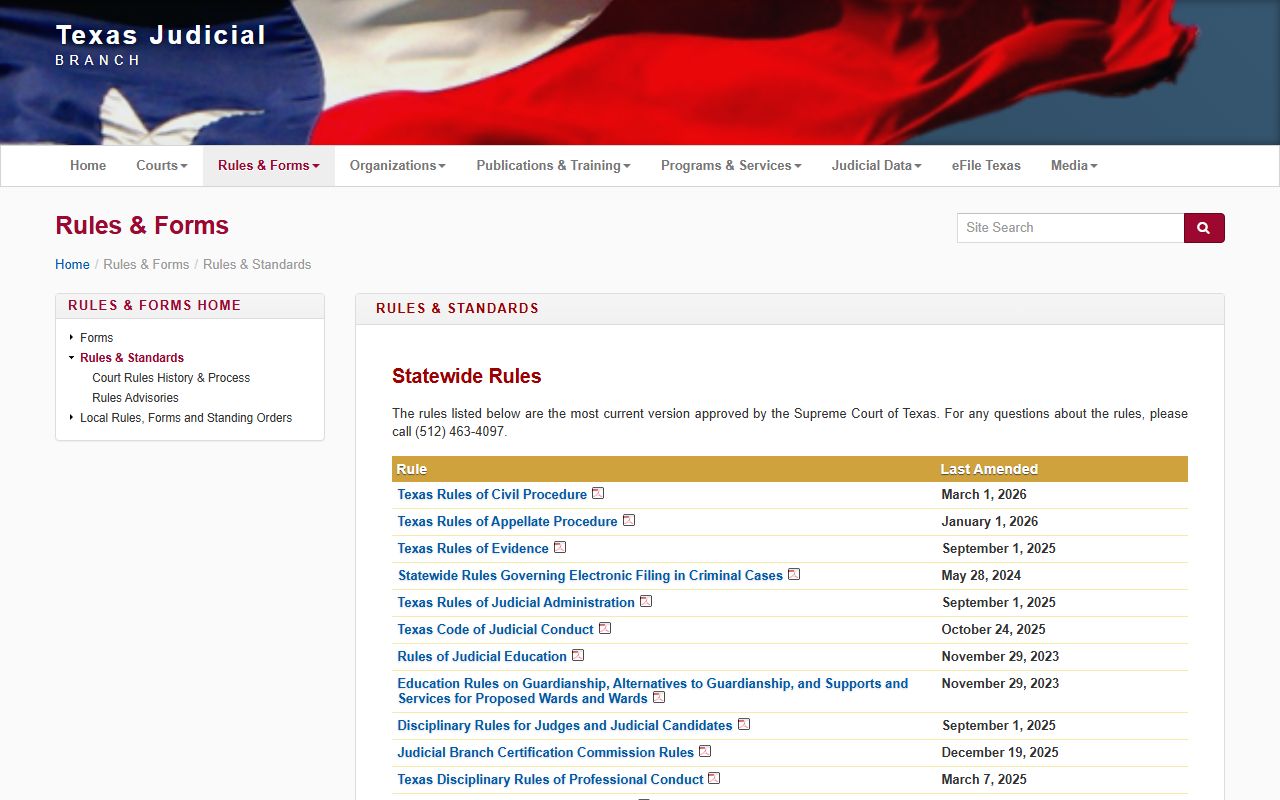
The Texas Courts rules and forms page provides official court documents needed to file family law cases in Calhoun County and across the state.
Resources for Calhoun County Residents
The Texas Judicial Branch self-help center is a free resource for people navigating family court without a lawyer. It explains court procedures, describes what to expect at hearings, and provides guidance on preparing your case. The Texas Courts FAQ page answers common questions about records access and how the court system works.
TexasLawHelp.org offers free guides for low-income Texans dealing with family law matters. The site covers divorce, custody, child support, protective orders, and more. Legal aid organizations serving South Texas may be able to provide direct assistance to Calhoun County residents who qualify based on income. Check the TexasLawHelp site for referrals to the nearest legal aid office.
For questions about vital records related to a family court case, the Texas Department of State Health Services maintains certified records at dshs.texas.gov/vital-statistics. These are separate from the District Clerk's court files but may be needed as supporting documents in some cases.
Cities in Calhoun County
Port Lavaca is the county seat and largest city in Calhoun County. All family court cases for county residents are handled at the District Court in Port Lavaca.
Communities in Calhoun County include Port Lavaca, Port O'Connor, Seadrift, and Point Comfort. None of these cities reach the threshold for a dedicated city page. All family law filings go through the Calhoun County Courthouse in Port Lavaca.
Nearby Counties
Calhoun County is a Gulf Coast county bordering several South Texas counties. Confirm your county of residence before deciding where to file your case.