
Search Texas Family Court Records
Texas family court records are public court documents kept at the District Clerk's office in the county where each case was heard. These records cover divorce, child custody, child support, paternity, protective orders, and related family law matters filed across all 254 counties in the state. Many counties now offer online access through their own portals or through the statewide re:SearchTX system. For a certified copy or the full case file, you contact the District Clerk in the county where the case was filed.
Texas Family Court Records Overview
Texas Family Court Records
Family court records in Texas include documents from several types of legal proceedings. Divorce cases, formally called suits for dissolution of marriage, make up a large part of these filings. But family court also handles child custody matters, child support orders, paternity suits, adoptions, protective orders related to family violence, and juvenile cases. Each proceeding creates its own set of court documents that go into the case file at the clerk's office.
Texas does not use a dedicated "family court" label for most of its counties. Family law matters are heard at the District Court level. In larger counties like Harris, Dallas, Bexar, and Tarrant, specific district courts are assigned to handle only family cases. In smaller counties, a single District Court judge handles all types of cases including family matters. The District Clerk keeps records for district courts, while the County Clerk handles county court at law cases and vital records.
The Texas Judicial Branch FAQ page is a good starting point for understanding how records are organized. The Office of Court Administration is clear that it does not keep individual case records. Records must come from the clerk in the specific county where a case was filed. There is no single statewide portal where you can pull all Texas family court records at once.
The FAQ page explains that family law matters including divorces are generally heard in District Courts, though some are heard in County Courts at Law. It also notes that the Office of the Attorney General is the official child support enforcement agency for Texas, separate from the courts that issue support orders.
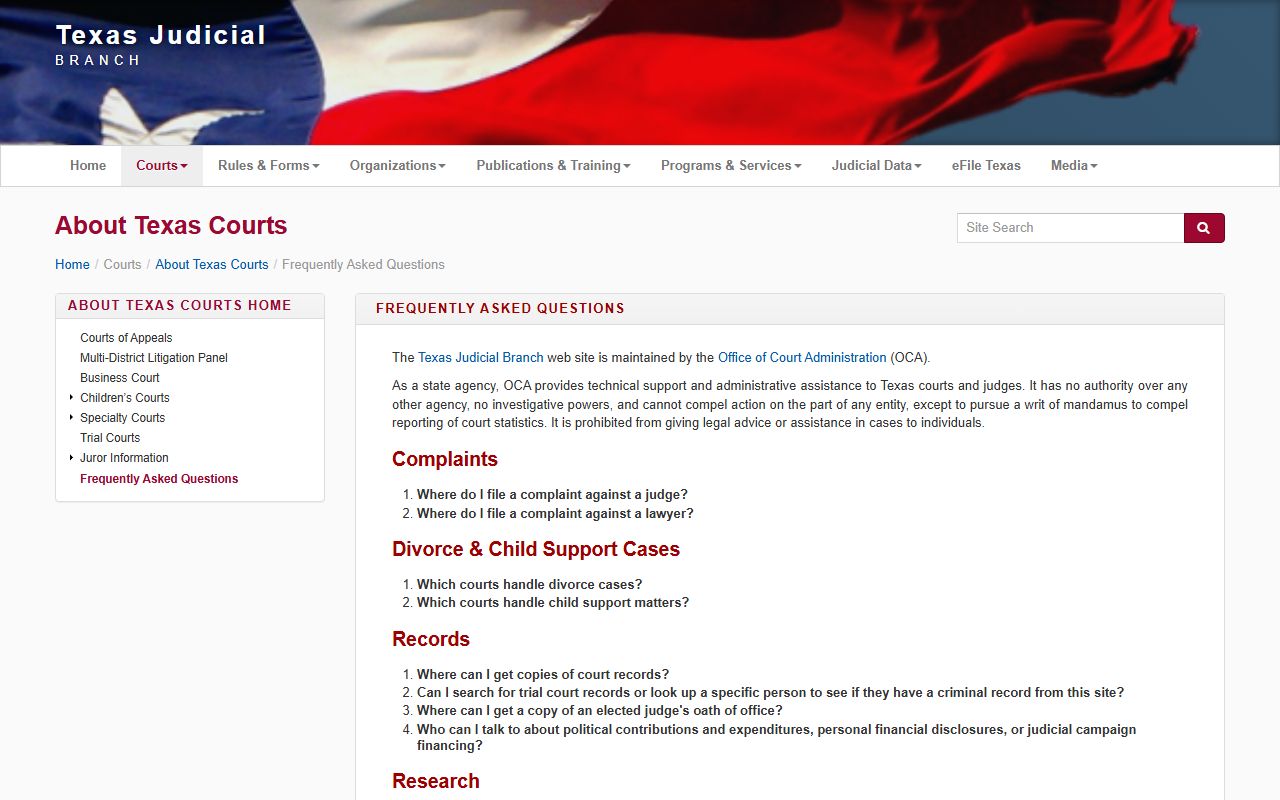
The Texas Judicial Branch FAQ page explains exactly where to obtain family court records in each type of Texas court, including which clerk to contact for different case types.
Where Texas Family Court Records Are Kept
The District Clerk in each of Texas's 254 counties keeps the official family court records for that county. That office maintains full case files for every family law case filed in the district courts, including divorce, custody, child support, and paternity suits. The clerk stores the original petition, all motions, financial disclosures, hearing transcripts, and the final order. Staff can pull records by party name or cause number and make certified copies on request.
For vital records related to marriage and divorce, the Texas Department of State Health Services Vital Statistics Section maintains a central index going back to 1968. DSHS can issue a divorce verification letter to confirm that a divorce took place and provide the county and approximate date. They do not issue the actual court documents. If you need the final decree or the full case file, you go to the District Clerk in the county where the case was filed. The DSHS index is useful when you do not know which county handled the case.
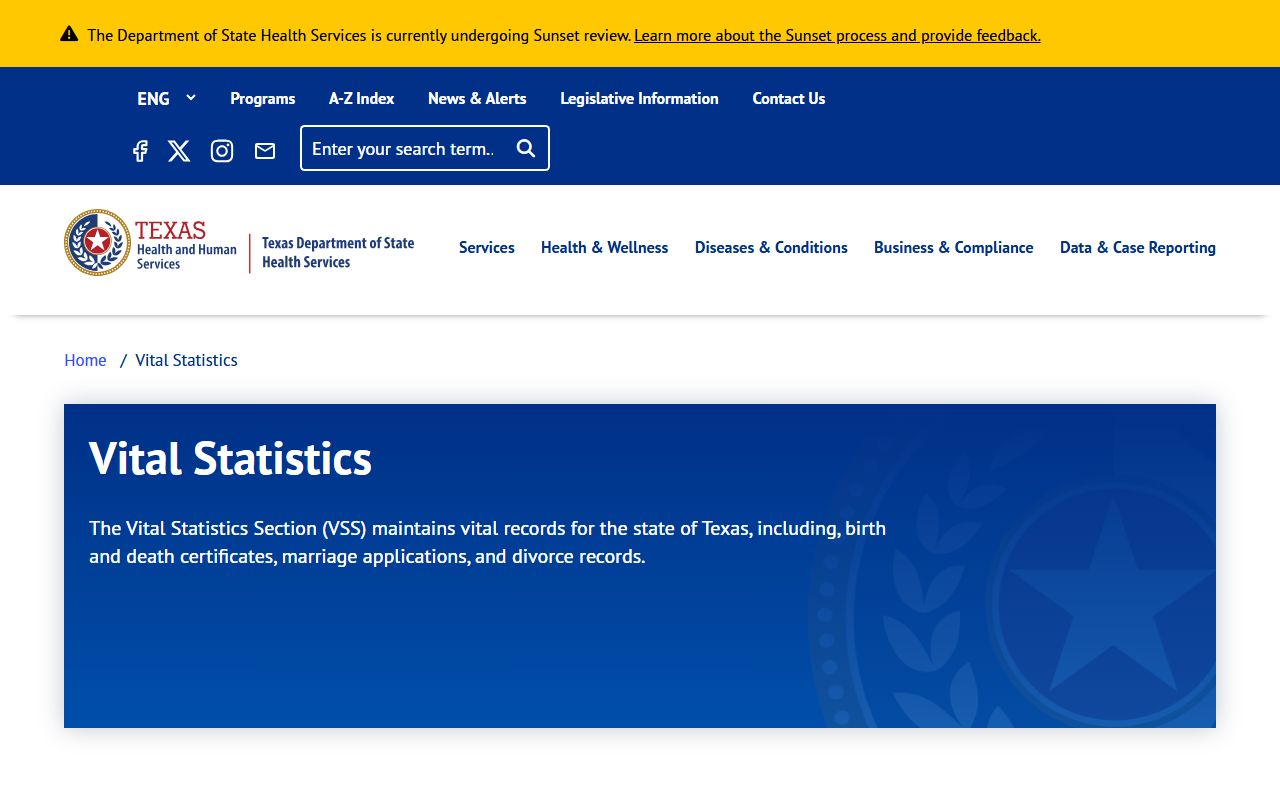
The Texas Department of State Health Services Vital Statistics page maintains the statewide index for marriage and divorce records going back to 1968, with online ordering available.
Child support cases involve a separate agency. While district courts issue child support orders as part of divorce, custody, and paternity cases, the Texas Office of the Attorney General is the official child support enforcement agency. The OAG handles enforcement, income withholding, and modifications through its Child Support Division. Court records for child support orders filed as part of a district court case are still kept at the District Clerk's office.
How to Search Texas Family Court Records Online
The re:SearchTX system is the closest thing Texas has to a statewide portal for family court records. It was created by the Texas Judicial Branch and lets users search court records from participating counties by date, case number, and party names. The system provides unofficial copies of case index information and documents from the eFiling system. Certified copies must still come from the clerk of the court. Coverage only goes back to November 1, 2018, and not every county participates.
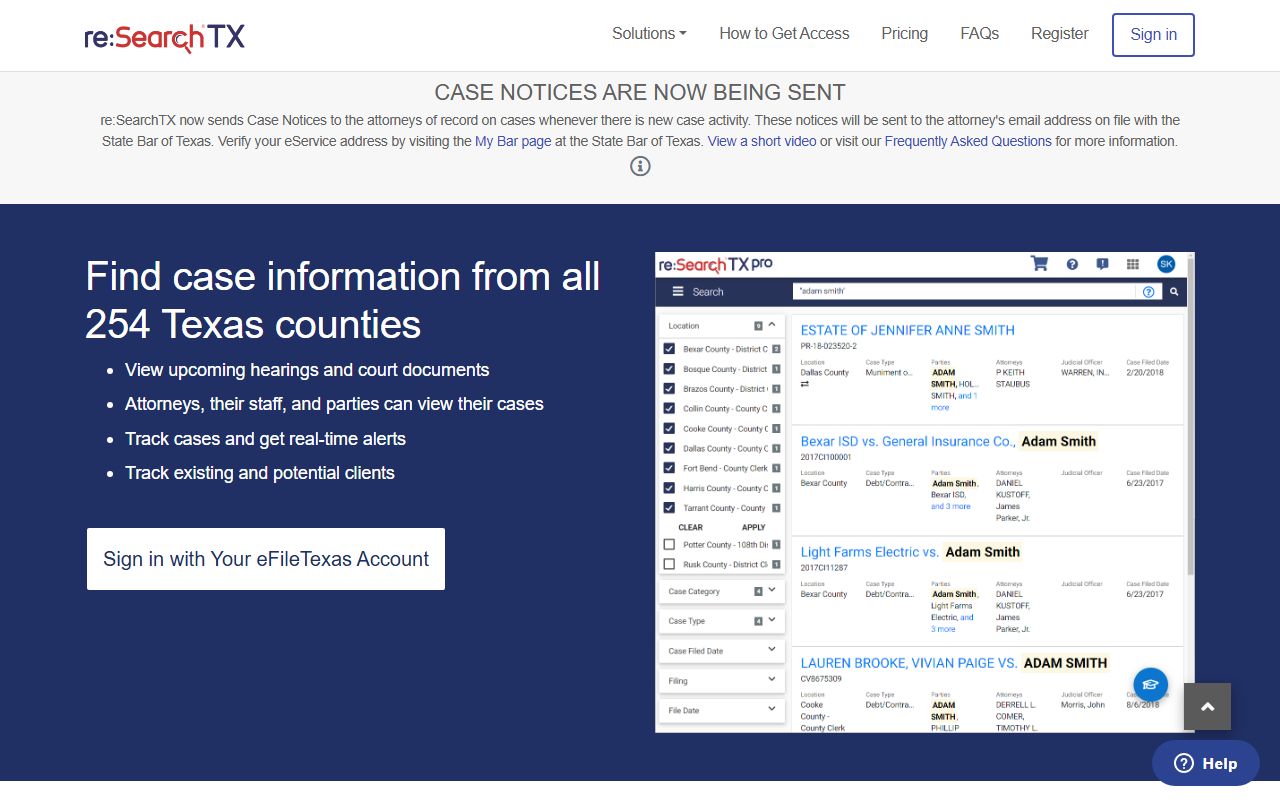
The re:SearchTX portal at research.txcourts.gov is the official Texas Judicial Branch system for searching court records statewide, offering case index information and document previews for registered users.
Many individual counties also run their own online case search systems. Harris County has its own portal at hcdistrictclerk.com. Dallas County offers a free case search. Tarrant County has a Court Document Lookup service. Travis County provides free online access to records from 2006 forward. El Paso County uses the Tyler Odyssey portal. If re:SearchTX does not have the county you need, check that county's own website directly.
Electronic filing is now mandatory for attorneys in all Texas civil and family cases at the district and county court level. The official e-filing system is eFileTexas.gov, which lists 18 approved service providers. Non-attorney filers are encouraged but not required to use e-filing. Since September 1, 2021, under Texas Family Code Section 105.008, all future child support orders require a Record of Support Order using the state-mandated form filed through eFileTexas.
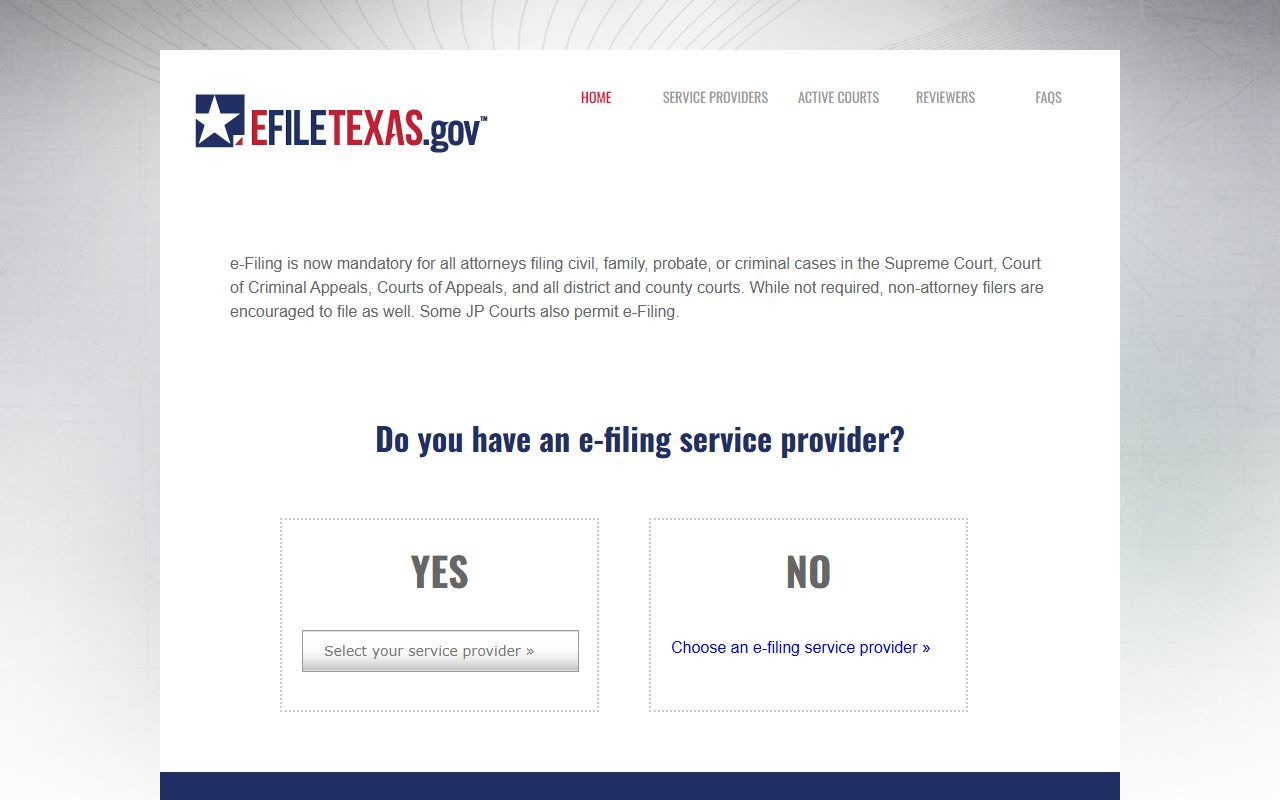
The eFileTexas.gov official e-filing system shows all approved service providers and mandatory filing rules for family and civil cases across Texas courts.
Types of Texas Family Court Cases
Divorce cases are among the most common family court filings in Texas. The formal legal term is a Suit for Dissolution of Marriage. The key document is the Final Decree of Divorce, which lays out property division, conservatorship of any children, the possession schedule, child support amounts, and any spousal maintenance. This decree becomes a permanent part of the public court record at the District Clerk's office.
Child custody cases in Texas are often filed as a Suit Affecting the Parent-Child Relationship, or SAPCR. These cases determine conservatorship, which is the Texas term for custody, and establish who makes decisions for the child and when each parent has the child. A SAPCR can be filed on its own or as part of a divorce. Modifications to custody orders are also filed at the District Clerk as separate cases.
The Texas State Law Library at guides.sll.texas.gov provides a comprehensive guide to family law forms. The library notes that Texas has very few official fill-in-the-blank forms compared to other states, which is why many people need help from an attorney or a legal aid organization. The guide links to SAPCR forms, custody modification kits, temporary restraining order toolkits, and paternity forms from the Texas Vital Statistics office.
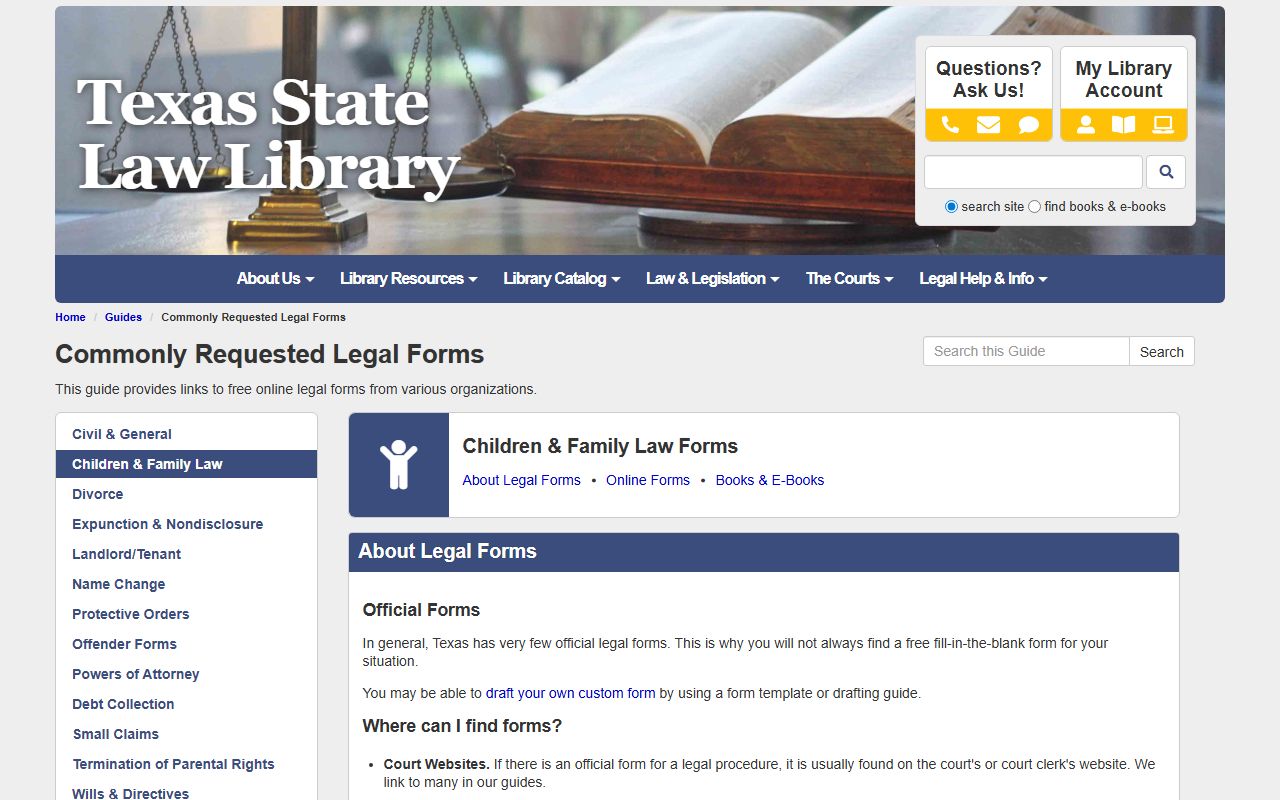
The Texas State Law Library's children and family law forms guide is a central resource for finding official court forms, legal aid resources, and step-by-step filing guides for all types of Texas family court cases.
Protective orders related to family violence are another major category of family court records. Texas has a Protective Order Registry established through Texas Government Code Sections 72.151 through 72.158, known as Monica's Law. This centralized online registry lets the public search for protective orders by county, the subject's name, or birth year. The registry was created after Monica Deming was murdered in 2015 by someone who had prior protective orders she did not know about. Clerks are required to enter orders into the registry within 24 hours of issuance.
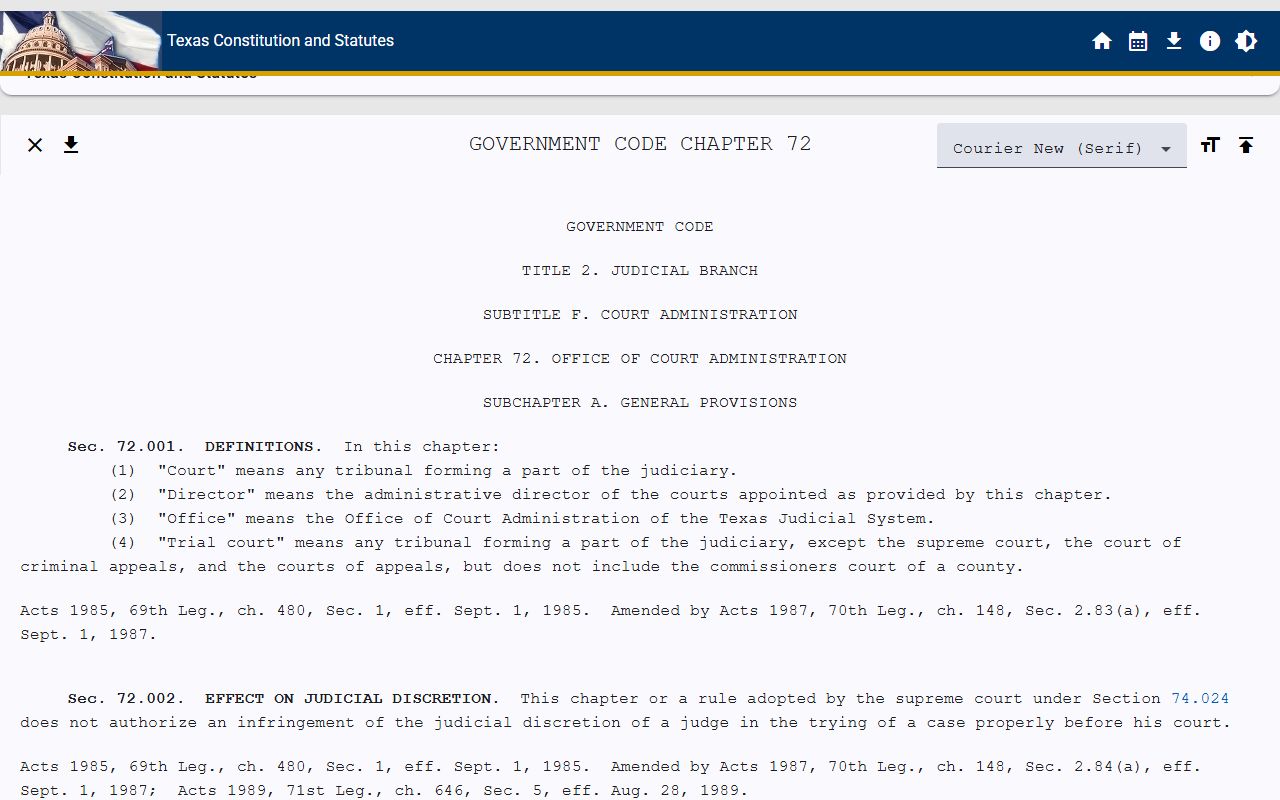
Texas Government Code Subchapter F details the statewide Protective Order Registry under Monica's Law, allowing limited public access to protective order information when the protected person opts in.
Juvenile Court Records in Texas
Juvenile records in Texas are treated very differently from adult family court records. Under Texas Family Code Chapter 58, law enforcement records and court records concerning a child are confidential and not available to the public. Juvenile court records may only be inspected by judges, probation officers, attorneys for the parties, and juvenile justice agencies. Members of the public do not have access to juvenile case files.
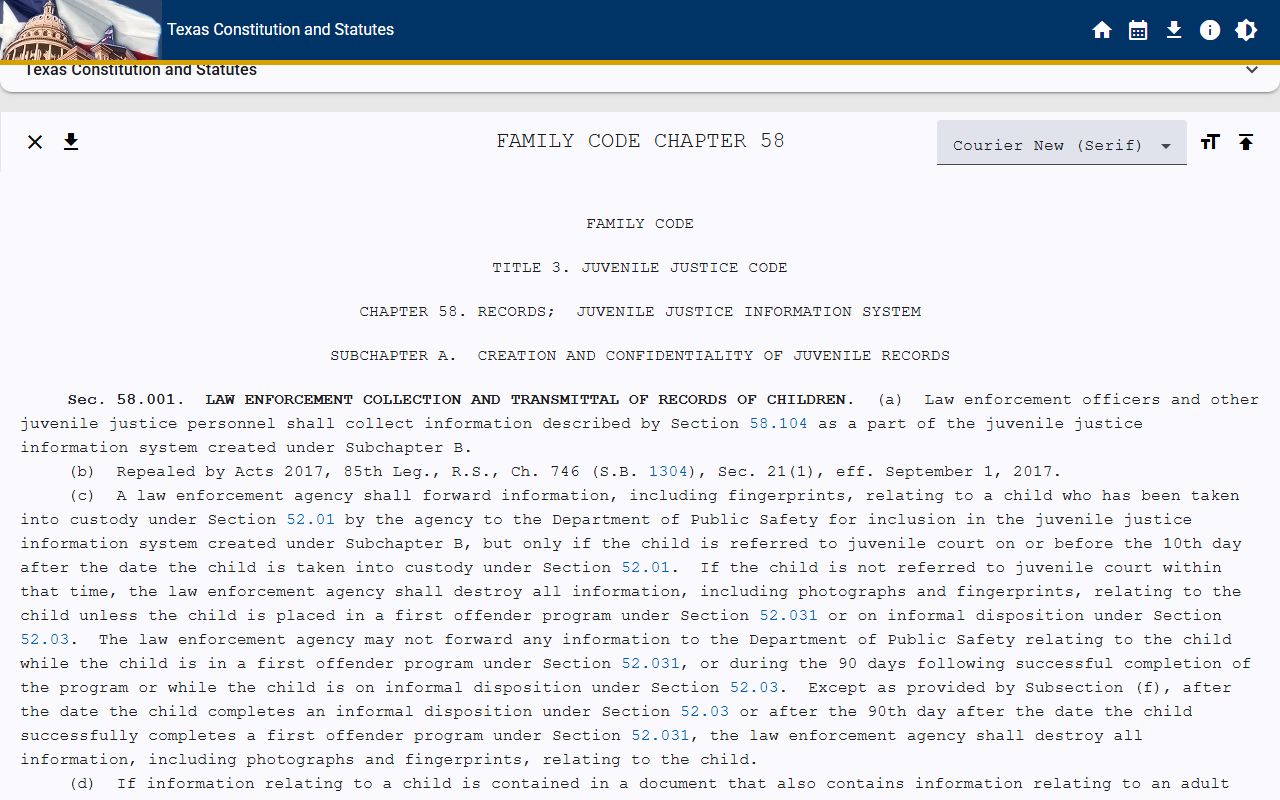
Texas Family Code Chapter 58 establishes the confidentiality rules for juvenile court records and law enforcement records, including the Juvenile Justice Information System and the procedures for sealing juvenile records.
Texas law also allows for sealing of juvenile records under Sections 58.251 through 58.259. Once sealed, the court and related agencies cannot disclose that the records exist. The person whose records were sealed can legally deny that the juvenile proceeding occurred. Records that involve certain offenses including gang activity and sex offender registration are exempt from sealing.
Child abuse and neglect investigation records fall under a different statute. Texas Family Code Section 261.201 makes reports of abuse or neglect and related investigation files confidential. These records are not subject to public release under the Texas Public Information Act. Even parents can only access limited information, and certain identifiers must be redacted before disclosure.
Texas Family Court Laws and Statutes
The Texas Family Code is the primary source of law for family court matters in Texas. Divorce law is in Chapter 6, covering grounds for divorce, residency requirements, the 60-day waiting period, and property division rules. Texas is a community property state, and Chapter 7 governs how courts divide marital assets. The court divides property in a way it deems just and right, with community property being anything acquired during the marriage.
Child custody law is in Texas Family Code Chapter 153. Texas uses the term conservatorship rather than custody. Joint managing conservatorship is the presumption. The court uses the best interest of the child standard, looking at factors like the child's physical and emotional needs, stability of each home, and each parent's plans for the child. Chapter 154 covers child support guidelines based on the obligor's net resources and the number of children.
Public access to court records in Texas is governed by the Texas Public Information Act at Texas Government Code Chapter 552. Government bodies must respond to records requests within 10 business days. If a request is denied, the governmental body may seek an opinion from the Attorney General. The Open Government Hotline at (877) 673-6839 handles complaints about violations.
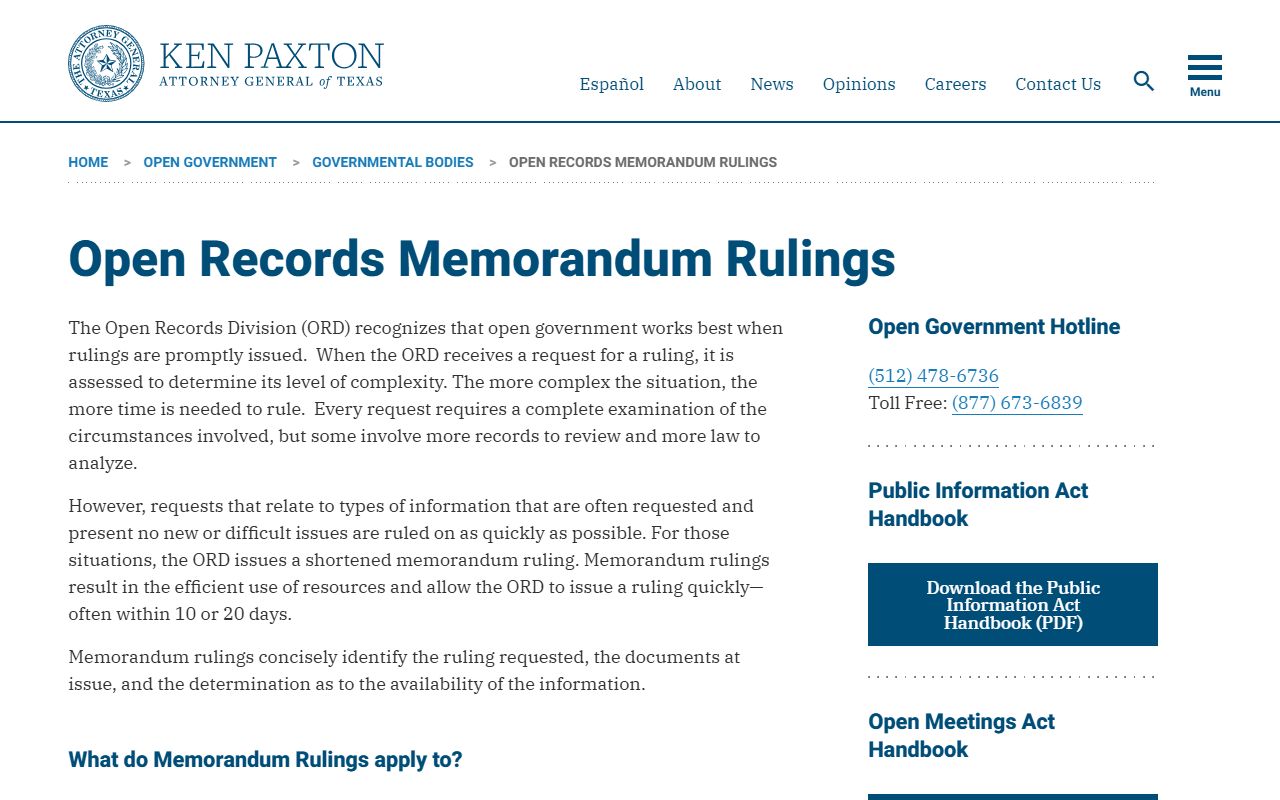
The Texas Attorney General's Open Records Memorandum Rulings page explains the specific public information exceptions most often at issue in family court record requests, including juvenile law enforcement records and child abuse investigation files.
Self-Help Resources for Texas Family Court
Texas courts see a large number of self-represented litigants, called pro se or unrepresented litigants, in family law cases. The Texas Judicial Branch provides a self-help page at txcourts.gov with resources for people who cannot afford an attorney. The page notes that a significant number of individuals seeking court access cannot secure legal aid services, and provides links to specialized resources for self-represented litigants.
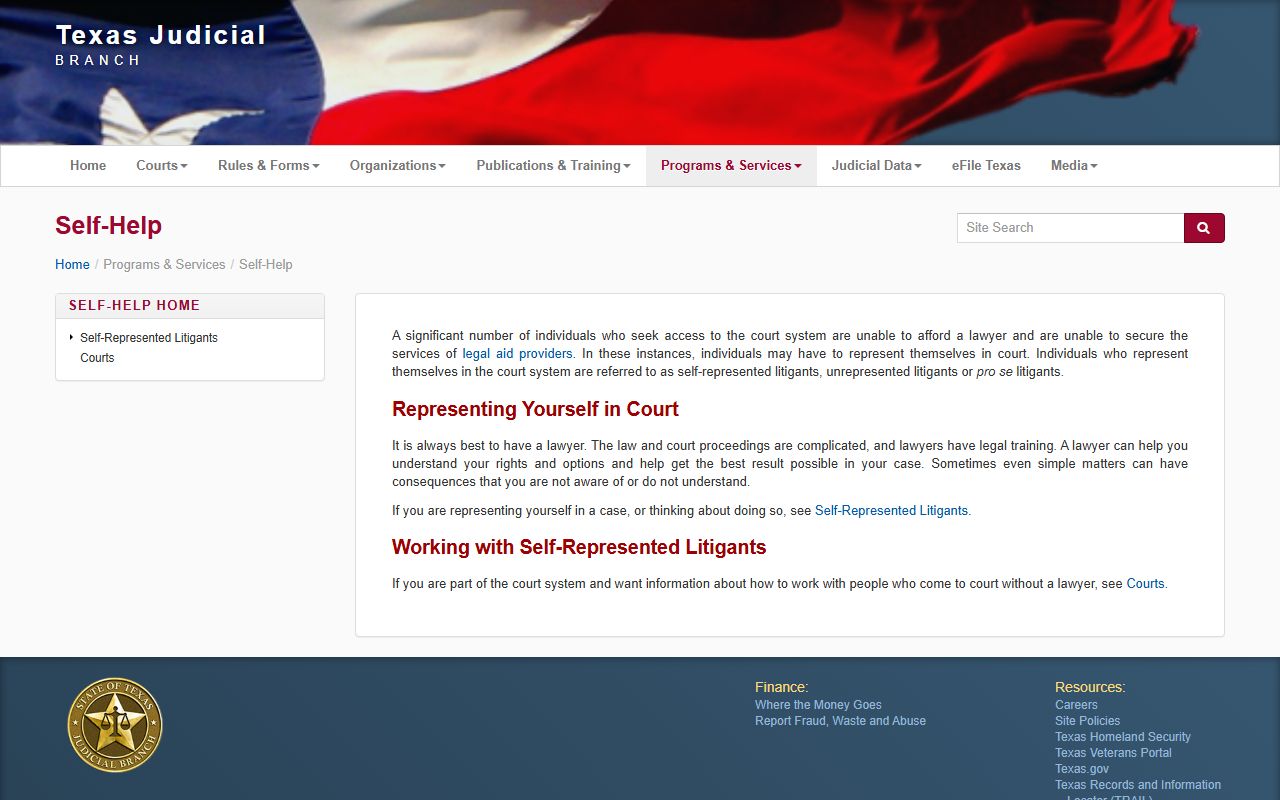
The Texas Judicial Branch self-help page provides resources for pro se litigants in family court cases, linking to forms, guides, and local resources for people navigating the court system without an attorney.
All official statewide court rules and forms are available at txcourts.gov/rules-forms. Since January 1, 2023, courts must post their local rules, forms, and standing orders to the Office of Court Administration website to be effective. This creates a centralized place to find local court requirements. Questions about the substance of a specific court's local rules should go to that court's clerk.
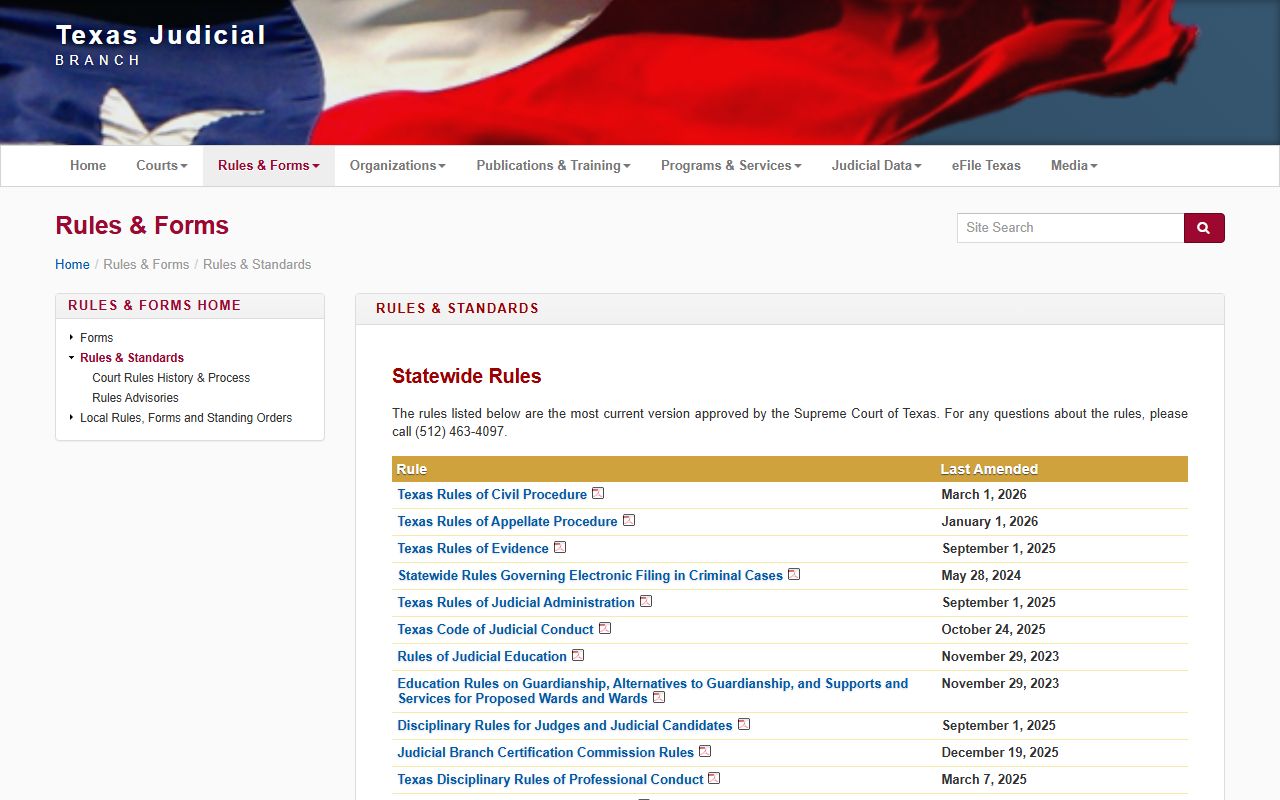
The Texas Court Rules and Forms page at txcourts.gov holds the most current statewide rules approved by the Supreme Court of Texas, plus the searchable local rules database required since 2023.
The Texas TOPICs portal at topics.txcourts.gov holds searchable citations of substitute service, legal notices, local rules, forms, and standing orders. It also hosts juvenile court remote proceeding plans under House Bill 422. Official records of court proceedings can only be obtained from the court maintaining the record, not through TOPICs. But it is a useful tool for finding local procedures before going to the courthouse.
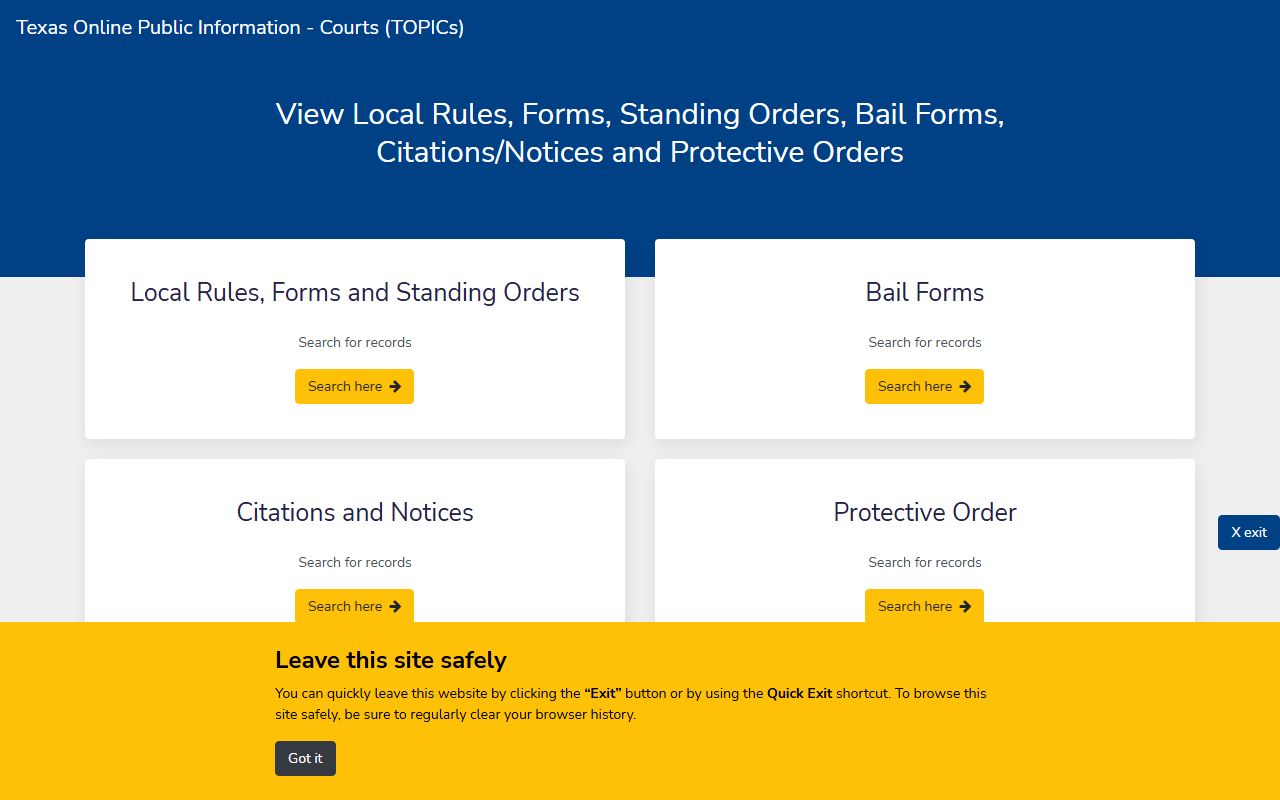
The Texas TOPICs portal is the official searchable website for court citations, legal notices, local rules, forms, and standing orders from courts across all 254 Texas counties.
Browse Texas Family Court Records by County
Each of Texas's 254 counties has its own District Clerk that handles family court cases. Pick a county below to find local contact info, online search portals, and resources for family court records in that area.
Family Court Records in Major Texas Cities
Residents of major Texas cities file family court cases at the District Court in their county. Pick a city below to find where to go for family court records in that area.