
Dallas County Family Court Records
Dallas County family court records are filed with the District Clerk in Dallas, the county seat of Texas's second most populous county. These records cover divorce cases, child custody and conservatorship matters, child support orders, paternity actions, and protective orders heard across the county's many family district courts. You can search Dallas County family court records online through the District Clerk's case search portal, visit the courthouse in person, or submit a written request to the clerk's office. The District Clerk maintains all case files and can help you find decrees, custody orders, and support agreements from both past and current cases.
Dallas County Overview
Dallas County District Clerk
The District Clerk's office in downtown Dallas is where all family court cases in Dallas County are filed and stored. District Clerk Felicia Pitre and her staff handle divorce filings, custody petitions, support orders, and all other family law matters for a county of nearly 2.7 million people. The office keeps case dockets, court calendars, and final orders. If you need a copy of a decree or want to look up an old case, this is your starting point.
Dallas County has more family district courts than almost any other county in Texas. The 9th, 18th, 25th, 30th, 35th, 95th, 102nd, 116th, 131st, 192nd, 254th, 255th, 256th, 301st, 302nd, 303rd, 304th, and 305th Judicial Districts all handle family cases here. Cases are assigned based on filing date and docket rotation. The sheer number of courts means the clerk's office processes a very high volume of cases every day.
| Office | Dallas County District Clerk |
|---|---|
| District Clerk | Felicia Pitre |
| Address | 600 Commerce Street, Suite 120, Dallas, TX 75202 |
| Phone | (214) 653-7425 |
| Hours | Monday through Friday, 8:00 AM to 4:30 PM |
| Website | dallascounty.org |
The Dallas County Clerk is a separate office, also at 600 Commerce Street, but in Suite 105. County Clerk John Warren handles vital records, marriage licenses, probate filings, and real property records. His office number is (214) 653-7149. For family court case files, you want the District Clerk at Suite 120. For a marriage license or birth certificate, go to the County Clerk at Suite 105.
Document copies are available online for purchase with a credit card, or you can come in person to the courthouse. Records from 1979 to present are available for most case types. The District Clerk's website at dallascounty.org has links to the case search portal, copy request forms, and contact information for each of the clerk's divisions.
Search Dallas County Family Court Records Online
Dallas County provides an online case search portal at dallascounty.org/case-search. This free tool lets you search by case number, party name, attorney name, or date range across all district courts. You can look up civil, criminal, family, and probate cases from the same interface. Records from 1979 forward are available for most case types.
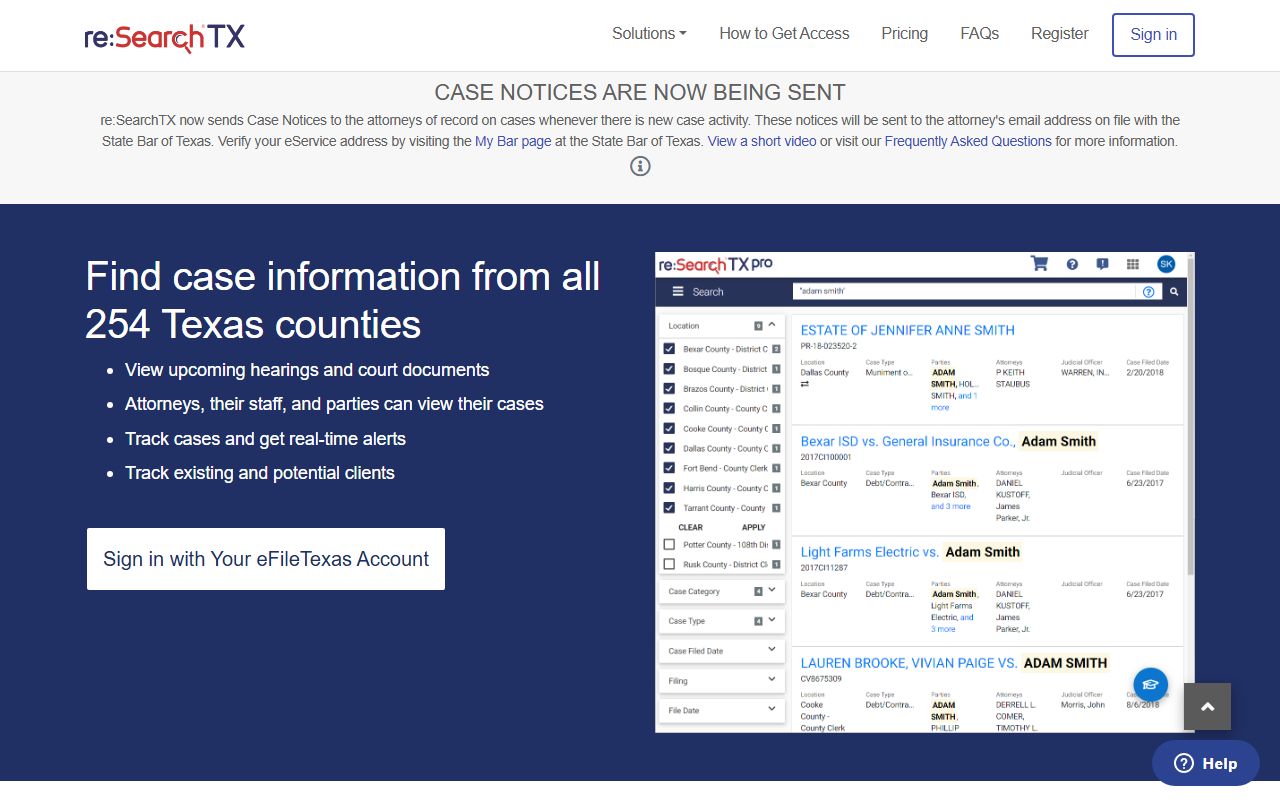
The statewide re:SearchTX portal at research.txcourts.gov covers Dallas County e-filed cases from November 2018 forward and is a good complement to the county's own search tool.
When searching, use full legal names as they appear on the court documents. Try both maiden and married names if applicable. The system allows partial name matching, which helps when you are unsure of exact spelling. If you get too many results, narrow by year range or case type. For documents, many are available to view and download online with a fee. Attorneys and professional users can subscribe to a plan for faster, higher-volume access.
You can also use the statewide re:SearchTX system from the Texas Judicial Branch. This covers cases filed through the state e-filing system going back to November 2018. Note that re:SearchTX provides unofficial copies only. The District Clerk remains the official custodian of court records and the only source for certified copies.
For in-person access, go to 600 Commerce Street, Suite 120, during business hours. Public access terminals are available at the courthouse. Staff can search by name or cause number and help you identify the right file. Bring a valid ID. Certified copies require a fee, so have your payment ready when you go.
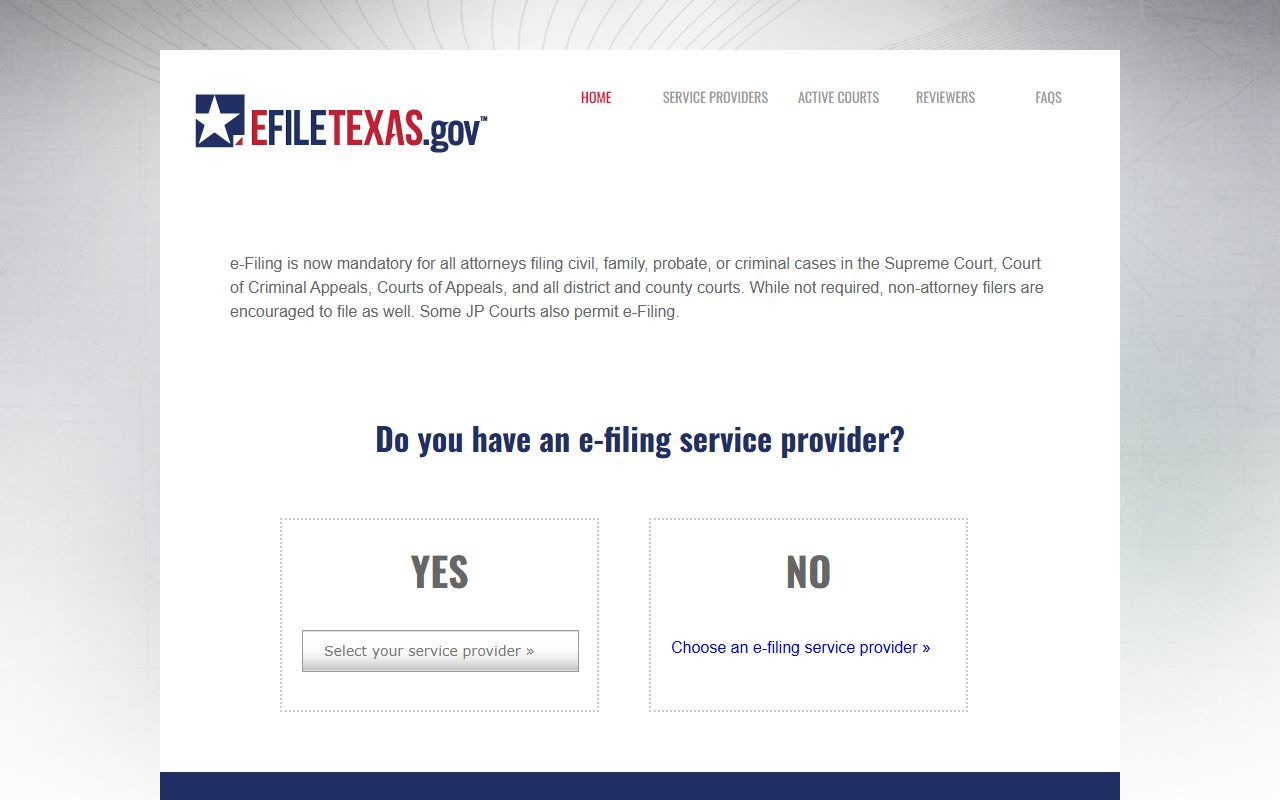
Attorneys must use eFileTexas.gov to submit new filings in Dallas County. The system integrates with the clerk's case management tools.
Types of Family Court Records in Dallas County
The Dallas County District Clerk keeps a wide range of family law case files. Divorce cases are the most common. The file contains the original petition, any temporary orders, the final decree, and post-decree modifications. If children are involved, the file also holds conservatorship orders and a possession schedule. Property settlement agreements are included as well.
Child custody and support cases are filed separately when no divorce is involved. Paternity actions fall under this category. The court can establish or modify a parent-child relationship, set a possession schedule, and order child support through these cases. For child support enforcement, the Texas Attorney General's Child Support Division handles enforcement separately from the court files. The AG's office maintains its own portal and hotline for enforcement questions.
Protective order cases are also part of the family docket. These involve applications related to family violence. Texas maintains a statewide protective order registry under Monica's Law, which lets you search for protective orders by county, name, or birth year. Some protective order records are restricted to protect the safety of the person who sought the order.
Note: Adoption records, juvenile court files, and child abuse investigation records are confidential under Texas law and are not part of the public case index.
Filing Family Cases in Dallas County
To file for divorce or any family court case in Dallas County, at least one spouse must meet the Texas residency requirement under Texas Family Code section 6.301. One spouse must have lived in Texas for at least six months and in Dallas County for at least 90 days before filing. If you do not meet this requirement, you cannot file here yet.
Once residency is met, you file a petition with the District Clerk. Attorneys must use the state's e-filing system at eFileTexas.gov. E-filing is mandatory for attorneys in civil and family cases in Dallas County. Non-attorneys can file in person at the clerk's office. The BVS 165 form must be submitted with divorce petitions involving children.
Texas law requires a 60-day waiting period after the petition is filed before a divorce can be finalized, per Texas Family Code section 6.702. The clock starts on the day you file. You cannot waive this period except in cases involving family violence. Most uncontested divorces take longer than 60 days once service, paperwork, and scheduling are factored in. Contested cases can take much longer, especially in a high-volume court system like Dallas County's.
Texas is a community property state. Under Texas Family Code Chapter 6, the court divides marital assets in a way it finds just and right. Community property is generally anything earned or acquired during the marriage. Separate property, which each spouse keeps, includes what they owned before marriage and any gifts or inheritances kept separate during the marriage.
Fees and Public Access
Most family court records in Dallas County are public under Texas Government Code Chapter 552, the Texas Public Information Act. You do not need to be a party to the case to request copies. Anyone can ask for a plain copy of a public court document.
Standard copy fees are $1.00 per page. Certified copies carry an additional $5.00 certification fee per document on top of the per-page cost. Documents can be purchased online with a credit card or paid in person with cash, check, or money order. Online requests are typically processed within one to three business days. Mail requests take longer, usually five to ten business days.
Subscription plans are available for attorneys, title companies, and others who need frequent access. These provide remote access to case files and document images. Individual subscription pricing and plan details are available through the District Clerk's office.
Note: Sensitive financial exhibits, records involving minor children's private information, and sealed domestic violence case files may have restricted access even though the rest of the case file is public.
Legal Help and Self-Help Resources
If you need help with a family court case in Dallas County, several free resources are available. The Texas Judicial Branch has a self-help resource page for people who represent themselves. It has guides on how to navigate the process and what to expect at each stage. Dallas County's court system is large and complex, so using a guide before you go is worth the time.
The Texas State Law Library has a detailed guide to family law forms at guides.sll.texas.gov. This includes forms for divorce, custody, paternity, protective orders, and more. TexasLawHelp.org is a free resource for people who cannot afford a lawyer. It has step-by-step guides and links to legal aid organizations across the state. For Dallas County residents, legal aid offices can help with low-income family law cases.
The Dallas County Law Library, located in the courthouse, provides access to legal texts, forms, and research tools. It is open to the public during courthouse hours. Staff can help you find resources but cannot provide legal advice. The Texas Judicial Branch FAQ at txcourts.gov explains how to get court records and how the court system is structured.
DSHS vital statistics at dshs.texas.gov handles birth and death certificates statewide. If you need a certified copy of a marriage certificate or divorce decree for identity purposes, the Dallas County clerk offices can help or direct you to the right state agency.
Cities in Dallas County
Dallas County is home to several large cities, all of which have family court cases heard through the Dallas County District Courts. Each qualifying city below has its own records page with courthouse details and filing information.
Nearby Counties
Dallas County borders several North Texas counties. If you are unsure which county handles your case, check which county you lived in for the 90 days before filing.