
Search Ellis County Family Court Records
Ellis County family court records are filed with the District Clerk in Waxahachie, the county seat of this fast-growing North Texas county south of Dallas. These records include divorce cases, child custody and support orders, paternity filings, and protective orders heard in the county's district courts. You can search Ellis County family court records through the county's online portal, the statewide re:SearchTX system, or by visiting the Waxahachie courthouse in person. The District Clerk's office maintains all family law case files and handles public records requests.
Ellis County Overview
Ellis County District Clerk
The District Clerk's office in Waxahachie handles all family court filings for Ellis County. Staff maintain divorce case files, custody and support orders, and protective order records. The office keeps court dockets, hearing schedules, and historical case files. Ellis County has grown rapidly in recent years as a Dallas suburb, and the court system has grown to match. If you need a copy of a decree or want to look up a case, the District Clerk in Waxahachie is where you start.
Ellis County has multiple district courts that handle family law matters. The 40th and 378th Judicial District Courts are among those hearing family cases in Waxahachie. Cases are assigned based on filing date. With more than 200,000 residents and continued growth, the clerk's office processes a substantial number of family cases every year.
| Office | Ellis County District Clerk |
|---|---|
| Address | 109 S. Jackson St, Waxahachie, TX 75165 |
| Phone | (972) 825-5091 |
| Hours | Monday through Friday, 8:00 AM to 5:00 PM |
| Website | co.ellis.tx.us |
The Ellis County Clerk handles vital records, marriage licenses, and property recordings. Both offices operate from the courthouse area in Waxahachie. For family court case files, contact the District Clerk. For vital records or land documents, contact the County Clerk. Both offices are in the county courthouse complex on S. Jackson Street in Waxahachie.
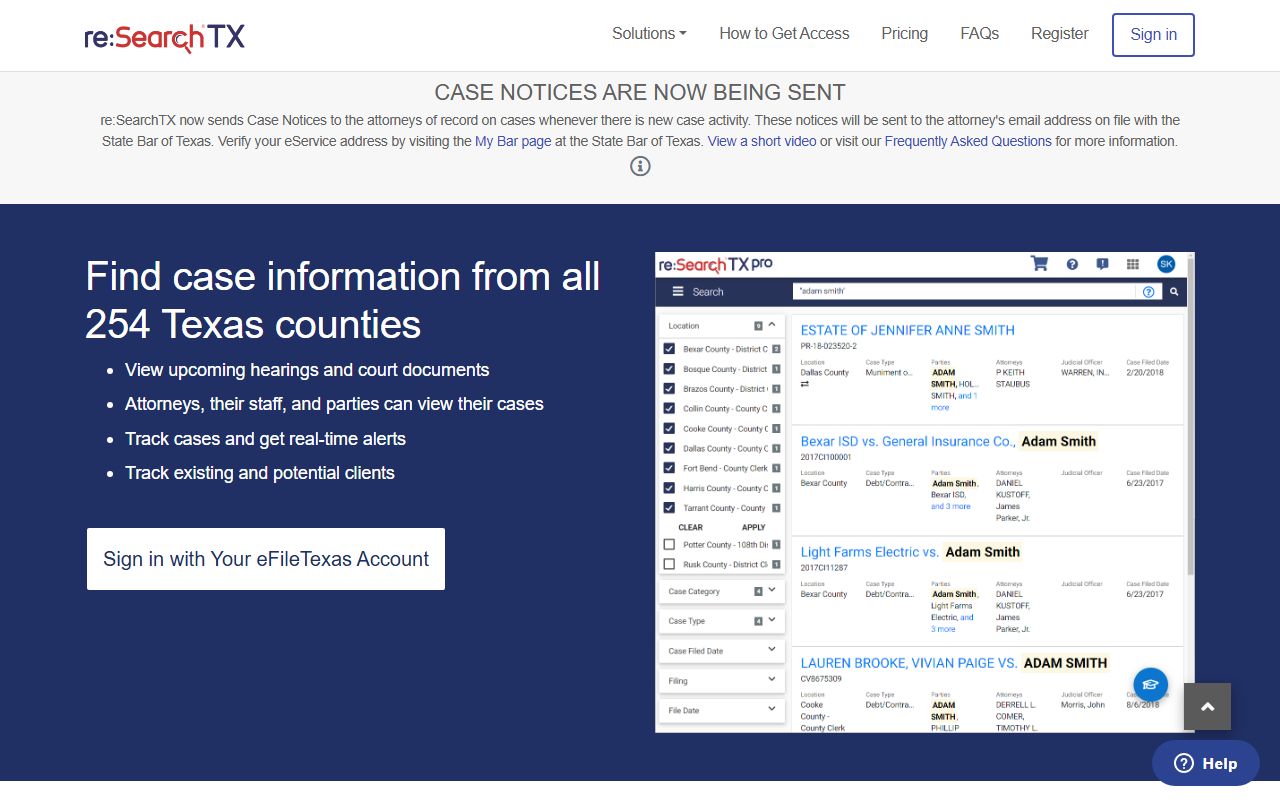
The re:SearchTX portal covers Ellis County cases filed through the e-filing system from November 2018 forward and is a good first step before contacting the Waxahachie clerk's office.
How to Look Up Ellis County Family Court Records
Ellis County provides online access to court records through the District Clerk's website at co.ellis.tx.us. You can also use the statewide re:SearchTX portal. It covers e-filed cases from November 2018 to present. Search by party name, case number, or date range. Both online tools provide unofficial views. For certified copies, contact the District Clerk in Waxahachie.
In-person access is available at 109 S. Jackson Street during business hours. Public access terminals may be at the courthouse for self-service searching. Staff can help with searches by name or cause number. Bring a valid ID and payment for copies when you visit. Certified copies cost $5.00 per document plus $1.00 per page for the copy fee.
Mail requests go to the Ellis County District Clerk at 109 S. Jackson St, Waxahachie, TX 75165. Include party names, approximate dates, and case number if known. Include payment and a self-addressed stamped envelope. Allow five to ten business days for processing. For large or complex requests, the clerk may need extra time or may charge a research fee.
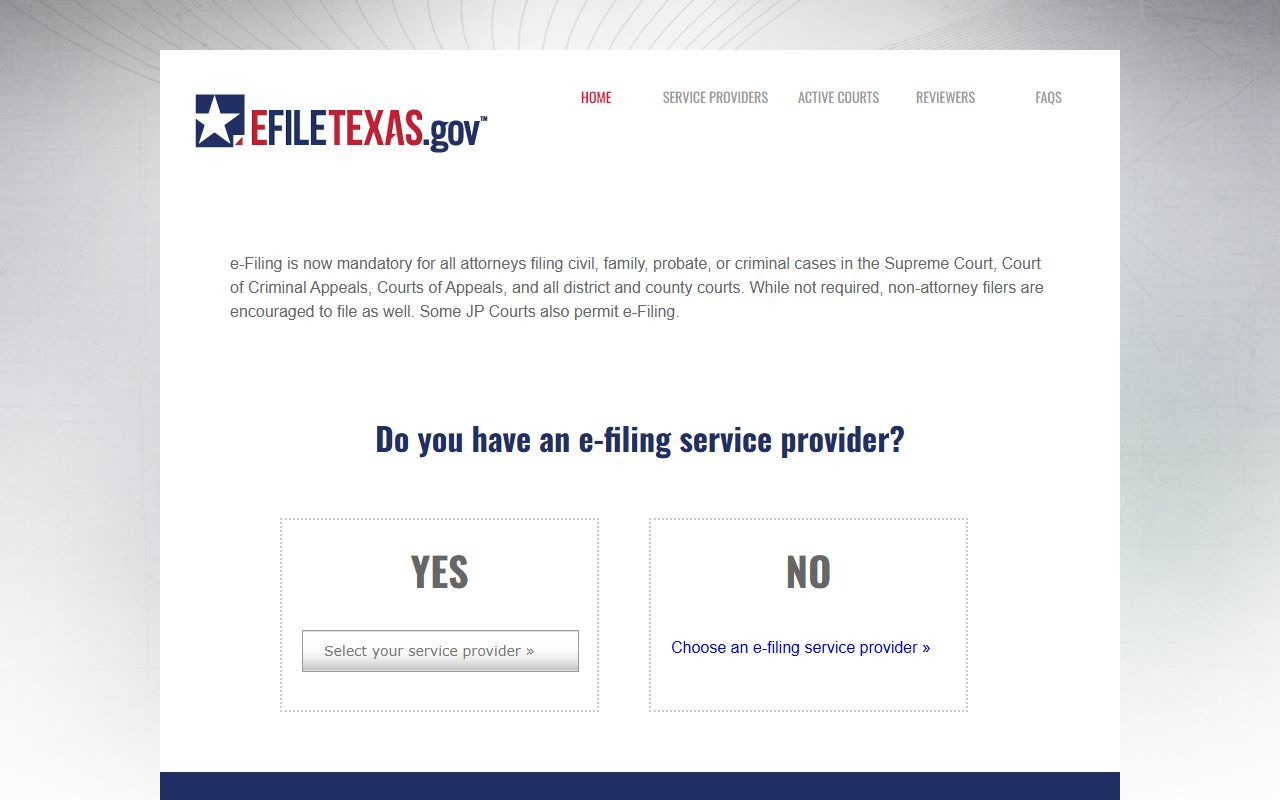
Attorneys filing new Ellis County family cases must use eFileTexas.gov, which integrates with the clerk's case management system in Waxahachie.
Family Court Records Kept in Ellis County
The District Clerk in Waxahachie keeps the full set of Texas family law case files. Divorce cases include the original petition, temporary orders, the final decree, and any later modifications. When children are involved, the file also holds conservatorship orders and a possession schedule. Property settlement agreements are part of the record as well.
Child custody and support cases are filed separately when no divorce is involved. Paternity cases also go through district court. The court can establish or modify a parent-child relationship, set conservatorship terms, and order support. For enforcement, the Texas AG's Child Support Division handles that work separately at 800-840-8757. Protective order cases are on the family docket, and the statewide registry under Monica's Law allows public searches for active orders by county and name.
Note: Adoption files, juvenile court records, and child abuse investigation materials are confidential under Texas law and are not accessible through the public case index.
Filing Family Cases in Ellis County
To file a divorce or family case in Ellis County, one spouse must meet the Texas residency requirement under Texas Family Code section 6.301. One party must have lived in Texas for six months and in Ellis County for 90 days before filing. Attorneys must use eFileTexas.gov. Non-attorneys can file paper documents at the clerk's office in person. Texas requires a 60-day waiting period from filing before a divorce can be finalized under Family Code section 6.702. Texas is a community property state, and the court divides marital assets in a just and right manner under Family Code Chapter 6.
Legal Resources for Ellis County
The Texas Judicial Branch self-help page at txcourts.gov guides people through family court proceedings. The Texas State Law Library at guides.sll.texas.gov has a family law forms guide. TexasLawHelp.org provides free guides and links to legal aid organizations serving Ellis County and the North Texas region. The Texas courts FAQ at txcourts.gov explains how the court system works and how to get records. Official court forms are at txcourts.gov/rules-forms.
Cities in Ellis County
Waxahachie is the county seat of Ellis County. The county also includes Ennis, Midlothian, and other growing communities. Family court cases from all Ellis County communities are filed at the Waxahachie courthouse. No cities in Ellis County currently have dedicated city pages.
Nearby Counties
Ellis County is south of Dallas in North Texas. Check which county you lived in for the 90 days before filing to confirm which court handles your case.