
Find Family Court Records in Fannin County
Fannin County family court records are on file at the District Clerk's office in Bonham, Texas. The records include divorce cases, child custody orders, child support filings, paternity actions, and protective order cases heard in the county's district court. If you want to search Fannin County family court records, you can use the Texas statewide online search system or visit the courthouse in person. This guide covers how to access records, what they contain, how the filing process works, and where to get help with family law matters in Fannin County.
Fannin County Overview
Fannin County District Clerk
The District Clerk in Bonnham keeps all family court records for Fannin County. This includes divorce filings, final decrees, custody orders, child support records, and any other family law documents that come through the district court. The office is in the county courthouse in Bonham. Staff can help you look up a case by name or cause number and can prepare copies on request.
Fannin County falls within the 336th Judicial District. This court has jurisdiction over all family law matters in the county, including contested divorces, uncontested divorces, custody modifications, and protective order hearings. The district court is the right place to file if you or your spouse has lived in Fannin County for at least 90 days before filing.
| Office | Fannin County District Clerk |
|---|---|
| Address | Fannin County Courthouse 101 E. Sam Rayburn Drive Bonham, TX 75418 |
| Phone | (903) 583-7486 |
| Hours | Monday through Friday, 8:00 AM to 5:00 PM |
| Website | co.fannin.tx.us |
How to Search Fannin County Family Court Records
The best starting point for searching Fannin County family court records online is re:SearchTX. This free portal is run by the Texas Office of Court Administration and covers district court records statewide, including Fannin County. You can search by the name of one party to the case or by a cause number if you have it. Results show filing dates, party names, case types, and docket entries.
To search, go to re:SearchTX and choose Fannin County from the location filter. Enter a last name and first name to narrow results. The system will pull up cases that match. Click on a case number to see more detail including what motions have been filed, hearing dates, and current status. Not all older cases are in the online system. For records going back many years, call the District Clerk directly.
In-person access is available at the Bonham courthouse. Bring a full name or cause number. Staff will pull the case index and let you review public documents at the clerk's counter. Copies can be made on the spot. If you need certified copies, ask the clerk for those specifically, as the process and fee are different.
Electronic filing through eFileTexas is the standard method for submitting new documents in Fannin County family court cases. Both attorneys and self-represented parties can use this platform. It handles divorce petitions, custody motions, support modifications, and other family law filings.
The eFileTexas portal is the official electronic filing system for Texas courts, including Fannin County District Court. You can use it to submit family court filings from anywhere.
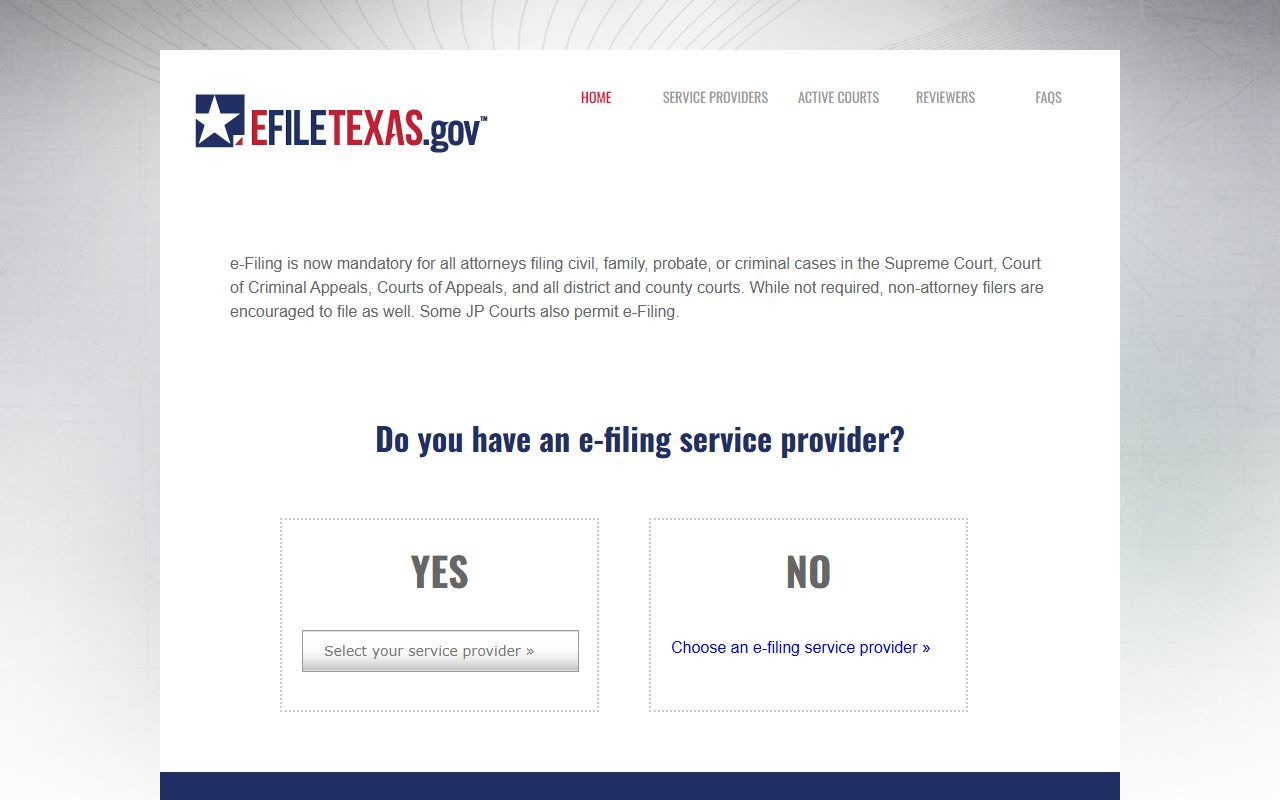
E-filing is required for most district court submissions in Texas. Create an account on eFileTexas to file divorce petitions, custody motions, and related documents in Fannin County.
Family Court Record Types in Fannin County
Family court records in Fannin County cover several types of cases. The most common is divorce. A divorce case file includes the petition, any responses, temporary orders that were entered during the case, and the Final Decree of Divorce. The decree is the binding document that ends the marriage and sets all terms. It is public record in most cases.
Custody and conservatorship cases are also handled in the district court. Under Texas Family Code Chapter 153, Texas uses a conservatorship system rather than calling it custody. Courts can name one parent as the sole managing conservator, or both parents can share that role as joint managing conservators. The possession schedule sets out when each parent has time with the children. These orders are part of the public case file.
Child support orders in Fannin County follow the guidelines set out in Texas Family Code Chapter 154. The court calculates support based on the paying parent's net income and the number of children. These orders can be modified if circumstances change. Paternity cases, adoption matters, and protective orders are also part of the family court docket. Adoption records, however, are confidential under Texas law and are not available to the public.
Filing for Divorce in Fannin County
To file for divorce in Fannin County, you must meet the residency requirement. Texas Family Code Section 6.301 requires that at least one spouse has lived in Texas for six months and in Fannin County for the 90 days immediately before filing. Once you confirm you meet that standard, you file the Original Petition for Divorce with the District Clerk at the Bonham courthouse.
Texas law requires a 60-day waiting period between the date of filing and the date the divorce can be granted. This comes from Texas Family Code Section 6.702. There is an exception if the court finds a history of family violence in the home. After the waiting period, if both parties agree, a final hearing can be set and the judge signs the decree.
Service of process is a required step. The petitioner must serve the other spouse with the filed petition and citation. A constable, sheriff, or private process server can handle service. If the other party agrees to cooperate, they can sign a Waiver of Service instead. Once served, the respondent has about 20 days plus the next Monday to file a written response. Failure to respond can lead to a default judgment.
Texas law recognizes both no-fault and fault-based divorce. The most common no-fault ground is "insupportability" under Texas Family Code Chapter 6. This means the marriage has broken down with no reasonable expectation of getting better. Fault grounds include cruelty, adultery, abandonment, and felony conviction. The ground used can affect how the court divides property.
The Texas State Law Library provides family law guides and forms at guides.sll.texas.gov, a helpful resource for Fannin County residents handling custody, divorce, or support cases.
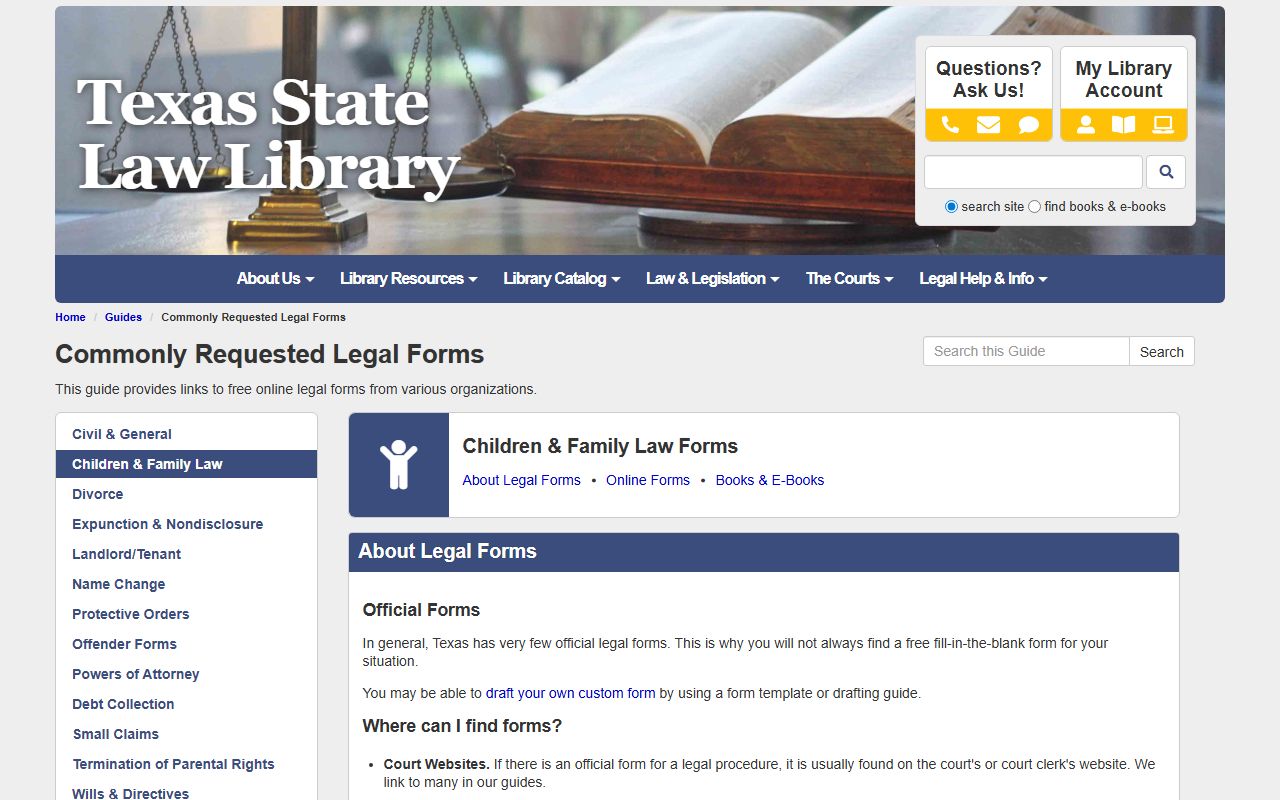
The law library resource includes form packets and step-by-step instructions for common family law matters handled in Fannin County District Court.
Record Access and Fees
Fannin County family court records are public records under the Texas Public Information Act. You do not have to be a party to a case to request copies. The standard copy fee is $1.00 per page. Certified copies carry an additional $5.00 certification fee. Payment is made at the District Clerk's office. For large requests, it may help to call ahead so staff can prepare the documents.
Some records are restricted. Sealed cases, adoption files, and records involving minors may not be fully accessible. If you believe a record you need is sealed, you would need to petition the court. Financial source documents attached to case files may also be protected. The clerk can tell you what is available before you make a trip.
People who cannot afford to pay court costs can request a fee waiver. Under Texas Rule of Civil Procedure 145, you file a Statement of Inability to Afford Payment of Court Costs. The court reviews your finances and decides. Forms for the statement are available at the courthouse and through TexasLawHelp.org.
Legal Resources for Fannin County
Residents of Fannin County can get help with family law cases through several channels. Legal aid groups in Northeast Texas serve people with low income who need help with divorce, custody, or protective order cases. The State Bar of Texas also maintains a referral service at (800) 252-9690 that connects people with local attorneys.
Lone Star Legal Aid may be able to help if you live in Fannin County and meet income guidelines. Their services cover family law and can include help with forms, advice, and in some cases direct representation. Call their intake line or visit their website to check eligibility and see if Fannin County falls in their coverage area.
For self-help materials, TexasLawHelp.org is an excellent free resource. It has guides for every stage of a divorce or custody case. The Texas Judicial Branch self-help page at txcourts.gov/programs-services/self-help also has tools and resources. Court forms are available at txcourts.gov. Vital records related to family cases, such as marriage certificates, are kept by the Texas Department of State Health Services at dshs.texas.gov.
Note: Grayson County is adjacent to Fannin County. If you live close to the border or are unsure which county has jurisdiction, confirm with the District Clerk before filing.
Nearby Counties
These counties are near Fannin County. Each has its own District Clerk and family court records. Make sure you file in the county where you or your spouse has lived for at least 90 days.